Friday, January 22, 2016

Character Worksheet for Jekyll/Hyde


Character Analysis Worksheet
In the boxes below, fill in details from your reading.  For example, when you come across a particularly descriptive or significant statement that your character makes, put it in the box marked “Words;” put the page number in the adjacent column
Character
Supporting Passage
Page Number(s)
Words

Actions

Appearance

Thoughts

Effects on Other People

Analysis:  In this box, write up your own personal impressions and opinions.


Study Guide for Dr. Jekyll/ Mr. Hyde

Study Guide
The Strange Case of Dr. Jekyll and Mr. Hyde
Robert Louis Stevenson

Chapter 1 – Story of the Door
  1. In the beginning of the book, the readers are presented with what seems like a detective novel, beginning with a sinister figure, a mysterious act of violence, and hints of blackmail and secret scandal.  Give examples from the text (direct quotations) that indicate these aspects.  Include the phrases and page numbers.
  2. What of the characteristics of the two men, Enfield and Utterson, seem to be Victorian attributes?  In other words, in what ways do they act and speak that different from men of our day?
  3. Victorian society highly valued reputation, even at times at the expense of reality.  What ideas about reputation can you draw from this first chapter?
  4. A major theme of this book is the conflict between the rational (reasonable, logical) and the supernatural (otherworldly, metaphysical).  What examples of this conflict do you find in the first chapter?


Chapter 2 – Search for Mr. Hyde
  1. What causes Mr. Utterson to be concerned about Dr. Jekyll, and what does he do about it?
  2. What significance does his dream have?  What affect does it have on the plot?  On the atmosphere? Symbolically?
  3. Describe Hyde’s appearance.  Give specific details (along with page numbers).  What significance does the word “troglodyte” have? 
  4. What is Dr. Lanyon’s relationship to Dr. Jekyll?  Describe his opinions and response to Jekyll’s experiments.


Chapter 3 – Dr. Jekyll Was Quite at Ease
  1. What attracted people to spending time with Utterson?  What was Jekyll’s opinion of him?
  2. What reasons does Jekyll give for his interest in Hyde?  Are they acceptable to Utterson?  Why?  Why not? 
  3. Why do you think Jekyll asks for justice for Hyde?


Chapter 4 – The Carew Murder Case
  1. How much later does the next part of the story take place?
  2. List 5 new characteristics that the readers learn about Hyde.
  3. How can Hyde be viewed as “otherworldly”  as a result of this chapter and the author’s descriptions?


Chapter 5 – Incident of the Letter
  1. How does Utterson behave like the proper Victorian English gentleman?
  2. How is the importance of reputation expressed in this chapter?  Which is more important?  Reputation or truth?  Outward appearances or evil potential?
  3. How is London described?  What is the mood or atmosphere caused by this description?
  4. One analysis of this book says that much “of Dr. Jekyll and Mr. Hyde is written in a brisk, businesslike, and factual way, like a police report on a strange affair rather than a novel.”  Do you agree or disagree?  Why?  Give specific examples from the book to back up your opinion.

Chapter 6 – Remarkable Incident of Dr. Lanyon
  1. How is Jekyll different when Hyde is not around?
  2. Describe Dr. Lanyon’s condition and situation.  How does he account for his condition?
  3. What might be the reason for the author not telling us exactly what happened to Lanyon?  What other important details are left unexplained at this point?
  4. Why is Utterson both desirous AND reluctant about seeing Jekyll again?


Chapter 7 – Incident at the Window
  1. When Jekyll talks to Utterson and Enfield from his window, what comparison does Stevenson make?
  2. What does Jekyll mean when he says “It will not last very long” to the men?
  3. How did their conversation end?  What do you think happened?


Chapter 8 – The Last Night
  1. How would you describe Jekyll’s butler, Poole?  What are some of his characteristics?  Give specific examples from this and previous chapters.
  2. What was the weather like when they hurry to Jekyll’s house?  What specific language does Stevenson use?  How does this affect the story?
  3. Appearances and decorum continue to be important to Utterson.  Give examples from this chapter.
  4. What reasonable and, to him, logical explanations does Utterson give for the present situation and for Poole’s concerns?
  5. Gothic literature often conveys a sense of the uncanny, of dark and disturbing events or deep secrets that break upon everyday life.  Could this book be considered a gothic novel?  Explain.
  6. Give 5 – 6 words that describe the atmosphere of this chapter.


Chapter 9 – Dr. Lanyon’s Narrative
  1. What mysteries are cleared up in this chapter?  What details remain unclear or unexplained?
  2. Why were Jekyll’s experiments with “transcendental medicine” and its results so shocking to Lanyon?


Chapter 10 – Henry Jekyll’s Full Statement of the Case
  1. Describe the struggle that Jekyll, as a young man, had between his good side and his bad side.  Give specifics from the story.
  2. What was the dual life that he led?
  3. Why was Hyde smaller in stature?  What were his other physical characteristics?
  4. Why did Jekyll cave in and take the potion after repressing Hyde?
  5. What further points of the mystery of Jekyll and Hyde are cleared up?  Do any questions remain unanswered?
  6. What motivated Jekyll in the first place? What drove him to separate his personalities?


Introduction to The Strange Case of Dr. Jekyll and Mr. Hyde

The Strange Case of Dr. Jekyll and Mr. Hyde
Robert Louis Stevenson


Information about Robert Louis Stevenson[1]

            Robert Louis Stevenson, born in 1850 in Edinburgh, Scotland, was a sickly child. His father was a designer of lighthouses, and he wanted his only son to study engineering.  However, when Stevenson entered Edinburgh University, he chose to study literature.  After graduation Stevenson was forced to split his time between the French Riviera and southern England because the warmer climates helped his deteriorating health, now known to have been caused by tuberculosis. His travels in France led to his first book, An Inland Voyage (1878), the story of a canoe trip on the country’s many canals. While in France, he fell in love with Fanny Osbourne, a married American.
            In 1879, Stevenson undertook an extremely risky voyage to California, where Fanny was divorcing her husband. The dreadful transatlantic crossing to New York and the cross-country train trip to the West Coast nearly killed him. The strain was so hard on his health that when he reached California and finally married Fanny, he was barely able to stand. His doctor told Fanny that her new husband could live for only a few months.
            Fortunately, the doctor was wrong. The couple returned to Scotland. It was there that
Stevenson began to write his first great success, Treasure Island (1883), the thrilling story of a
swashbuckling pirate named Long John Silver.  The writer’s deteriorating health prompted the
couple to move to the south of France, where Stevenson completed A Child’s Garden of Verses
(1885). At his next home, in southern England, Stevenson wrote Kidnapped. Nonetheless, financial
worries were never far away. One night Stevenson had a nightmare so strange that he decided to use it as the basis for a novel. This novel, The Strange Case of Dr Jekyll and Mr Hyde (1886), became one of Stevenson’s most popular creations and helped to ease his financial strain. 
            In 1888, an American publisher asked Stevenson to write a travel book about the South Pacific. The couple jumped at the chance to escape to the tropics. They chartered a yacht and sailed from San Francisco to the Marquesas Islands, Tahiti, and Hawaii. The author’s health improved in the tropical sun, and in 1890 the Stevensons decided to settle in Samoa.
            On his estate in Samoa, Stevenson finished David Balfour (1893), a sequel to Kidnapped, as well as several books about nature and life in the South Seas. His descriptions of his exotic and romantic lifestyle captivated readers. During his years in Samoa, legends grew up about Stevenson that led to his reputation of being one of the most beloved storytellers of his time.  
            Stevenson died in Samoa on December 3, 1894, at the age of forty-four. At the time of his death, he was working with friends in Scotland to prepare an edition of his complete works.

Introduction to the Novel[2]

            Why has Dr Jekyll and Mr Hyde touched so many readers so powerfully? One answer lies in
the spirit of the time in which it was written. At the end of the 1800s, Britain was experiencing a period of intense social, economic, and spiritual change, after many decades of confident growth and national self-fulfillment. Dr Jekyll and Mr. Hyde perfectly captured some readers’ fears that their carefully built society was hypocritical.
            Stevenson was aware of the new ideas about economics, science, and the workings of the mind.  To many readers, Dr Jekyll and Mr Hyde was a symbolic representation of these threats to traditional British society. Political reforms had given many more men the right to vote, and the working classes were beginning to flex their political muscles. Karl Marx’s ideas about the struggle for power among the different social classes were becoming more influential. To some of Britain’s upper-class readers,  the character of Edward Hyde represented the increasing political power of the working class.
            Other readers saw in the novella echoes of Charles Darwin, who earlier in the century had challenged the long-held religious belief in God’s creation of the universe. Darwin had claimed that life-forms developed as a result of evolution, the extremely slow and gradual changes species underwent in response to their environments.  Gone was the certainty of the religious model of life. It was replaced by social Darwinism, a radical new conception of life as a struggle in which only the fittest survived. Some readers considered Hyde to be a model of the strong yet evil individual who would survive while Jekyll fell. Hyde was the natural man, free of the civilizing influences  of society and religion. Stevenson himself had received an extremely strict religious upbringing, which  emphasized sin and the punishments of hell. He seems to have reacted against this upbringing, and the conflict between religion and science probably interested him greatly.
            Still other readers found in Dr Jekyll and Mr Hyde a reflection of the new ideas about the workings of the human mind. A Viennese doctor named Sigmund Freud had begun the investigations
that would lead him to create psychoanalysis, a method of analyzing psychic phenomena and treating emotional disorders. Freud believed that human beings are powerfully influenced by impulses of which they are not aware and which are often expressed in dreams. To many readers, Hyde represented Dr. Jekyll’s subconscious desire to be freed from his society’s restrictions.

THE TIME AND PLACE
            The novella takes place in London in the 1880s. The settings include Jekyll’s fine home in a formerly grand neighborhood now in decay; Lanyon’s comfortable home in Cavendish Square, where
many distinguished doctors have their houses and offices; and Hyde’s house in Soho, a part of London known for its immigrant populations.

The Victorian Era
            Robert Louis Stevenson was born at the height of the Victorian Era, which stretched from the 1830s to the beginning of the 1900s. Britain’s Queen Victoria came to the throne in 1837 at the age of
eighteen and ruled until her death in 1901.  During her sixty-four-year reign, Great Britain was the world’s leading economic and military power and controlled a vast empire.
            Queen Victoria’s reign was a period of intense change in many arenas. Railroads and a postal system expanded to link almost every corner of the nation, making transportation and communication much faster. Medical and sanitary advances led to improvements in health. The government began to support schools financially. Political reforms allowed more people to participate in self-government. Industry grew rapidly, while agriculture became less important to the economy. Cities like London, Manchester, and Glasgow became densely populated as masses of people flocked to them in search of work.
            The prosperous decades between 1850 and 1870 were characterized by a general optimism and a sense of accomplishment. By the 1880s, however, pessimism and worry had begun to cloud the thoughts of many Victorians. With the increase in the urban population, poverty became a formidable problem.  The strength of Britain’s vast empire was challenged by difficult foreign wars. Workers  demanded more power, and women were entering the workforce in greater numbers. The changes in traditional society disturbed and frightened many Britons.
            It was at this historical juncture that Stevenson wrote The Strange Case of Dr Jekyll and Mr Hyde. As you read, look for signs of a society undergoing major changes


[1]  "Study Guide for The Strange Case of Dr. Jekyll and Mr. Hyde." Glencoe Literature Library. McGraw Hill Education. Web. 1 Jan 2013. <http://www.glencoe.com/sec/literature/litlibrary/strangecase.html>.  p. 2.

[2] . "Study Guide for The Strange Case of Dr. Jekyll and Mr. Hyde." Glencoe Literature Library. McGraw Hill Education. Web. 1 Jan 2013. <http://www.glencoe.com/sec/literature/litlibrary/strangecase.html>.  p. 3 – 4.

Writing 1 -- Syllabus -- Spring, 2016


Week/Date
Literature
Assign. Due
Writing
Grammar Topic
Week 1
(1/21)
Introduction to The Strange Case of Dr. Jekyll and Mr. Hyde


Modifiers
Week 2
(1/28)
Jekyll/Hyde:  Ch. 1 – 2
(pg.1 – 11)
Answer 2 questions for Ch. 1 and 2 for Ch. 2.
Narrative Essay Pre-Write
Prepositional Phrases
Adj/Adv Phrases
Week 3
(2/4)
Jekyll/Hyde:  Ch. 3 – 4
(pg. 12 – 17)
Be prepared to discuss the study questions for Ch. 3 & 4.
Narrative Essay Rough Draft
Participles/Gerunds
Week 4
(2/11)
Jekyll/Hyde:  Ch. 5 – 6
(pg. 18 – 24)
Answer 2 questions for Ch. 5 and 2 for Ch. 6.

Appositives & Infinitives
Week 5
(2/18)
Jekyll/Hyde:  Ch. 7 – 8
(pg. 25 – 35)
Be prepared to discuss the study questions for Ch. 7 & 8.
Narrative Essay Final Draft
Clauses: Adjective, Adverb, Noun
February 25 – No CHAT
Week 6
(3/3)
Jekyll/Hyde: Ch. 9 – 10
(pg. 36 – 54)
Answer 2 questions for Ch. 9 and 2 for Ch. 10.
Theme & Character Pre-Write
Identifying Subject & Predicate
Week 7
(3/10)
Short Stories: Gift of the Magi (p. 1);  After Twenty Years  (p. 21)
2 Short Story Chart Worksheets
Theme & Character Rough Draft
Compound Sentence & Complements
Week 8
(3/17)
Makes the Whole World Kin (p. 85); A The Furnished Room (p. 23)
2 Short Story Chart Worksheets

Direct & Indirect Objects
Week 9
(3/24)
Short StoriesRetrieved Reformation (p. 49); The Pimenta Pancakes (p. 29)
2 Short Story Chart Worksheets
Theme & Character Final Draft
Linking Verb Complements
March 30 – No CHAT
Week 10
(4/7)
Short StoriesThe Ransom of Red Chief (p. 71); Poems of Robert Service (handout)
2 Short Story Chart Worksheets
News Story Pre-Write
Simple & Compound Sentences
Indep/Subord Clauses
Week 11
(4/14)
Poetry:  Hughes (p. 51); Williams (p. 48); Frost (p. 44)
2 Poetry Analysis worksheets
News Story Rough Draft
Indep/Subord Clauses
Week 12 (4/21)
Poetry:  Wordsworth (p. 12); Browning (p. 19); Bronte (p. 24); Hopkins (p. 31)
2 Poetry Analysis worksheets

Sentence Structures
Week 13 (4/28)
Poetry:  TBD
2 Poetry Analysis worksheets
News Story Final Draft
Review
Week 14 (5/14)
PoetryT.S. Eliot (Handout)
Poetry Presentations

Re-Write
Spring Writing Test
Grammar Test
Week 15 (5/12)
Poetry Presentations


Tuesday, January 5, 2016

Grades are Coming!

Greetings Writing 2 Students and Parents!

I've just finished grading the Comparison/Contrast essays, putting all of the scores for assignments in my gradebook, and calculating the grades for the Fall semester.  Look for an e-mail from me with the individual grades.  As tutors, these are suggested grades for you as homeschooling families to consider.  I've enjoyed my time with these students -- they've worked hard and are a delightful class!

My thoughts about grades:
For those who are new to my classes, let me share my thoughts on grades.  As I homeschooled, I didn't give my children grades.  I felt that grades were far too subjective.  I taught my own children for mastery and for learning.  Many times, we didn't proceed with a topic until they were ready, no matter how long that took.  In a class setting, we don't have that luxury, but I do my best to read the students and their understanding of the material.  Sometimes I can reteach or adjust the lessons, but I can never fully know the extent to which each student has grasped information or mastered a task.  This makes giving grades a challenge, and again, subjective.

Letter grades are a funny thing.  For some students, it becomes the only motivation for doing well.  For some, it becomes a measure of their worth as a person or as an academic learner.  I personally don't like these "side effects" of the grading system.  On the other hand, grades can be a valid reflection and reward for working hard, being diligent, and understanding the materials.

When teaching students to be good writers, I give a lot of consideration for growth and improvement.  Each student has a starting place; over time, I look for him or her to learn the mechanics of grammar, good writing techniques, and analytical thinking skills.

For this class, I gave points for attendance, participation, short assignments, grammar work, quizzes, and longer essays. I tend to be an "easy grader" and like to see my students encouraged to do their best. 

My Grading Process:
To further clarify my grading, let me explain the categories.  For the past two years I've been using Engrade, an online grade book.  With this program, I can assign a category to each assignment, for example, Writing, Literature, Grammar, Assignments (in-class work.) Each category is somewhat self-explanatory, except for perhaps the "Assignments" section.  This is where I put our Quick Writes, vocabulary work, and any other class participation scores. Engrade figures percentages for total scores and for scores within each of these categories.

However, the four categories do not have the same number of assignments, so a straight averaging of the scores does not give an accurate total percentage/grade.  For example, the Assignments category had 16 scores, and 15 of them were small, 5-point Quick Writes.  Writing section had fewer assignments, but the scores were higher per assignment. 

Though the categories are not exactly even, I feel that dividing the scores like this is helpful because it helps parent, students, and teacher have a better picture of the work done in the semester.  For example, if a student scores 100% on this Assignments section, I know that he showed up and participated well in class.  A low score in the Literature section is most likely a sign of a significant number of missing assignments.  Likewise, a low score in grammar could be because assignments were not handed in, or it could be a lack of knowledge in this area. As it is with all homework assignments for any subject area, the scores reflect a mix of quantity and quality. 

I hope I haven't further confused the grading for this class.  Working with students to help them develop into first-rate thinkers and writers is my  primary goal.  Points, scores, percentages, and grades are only small parts in the learning process.  If you have any questions, don't hesitate to ask!

Blessings to all of you!
Mrs. Prichard

Thursday, December 17, 2015

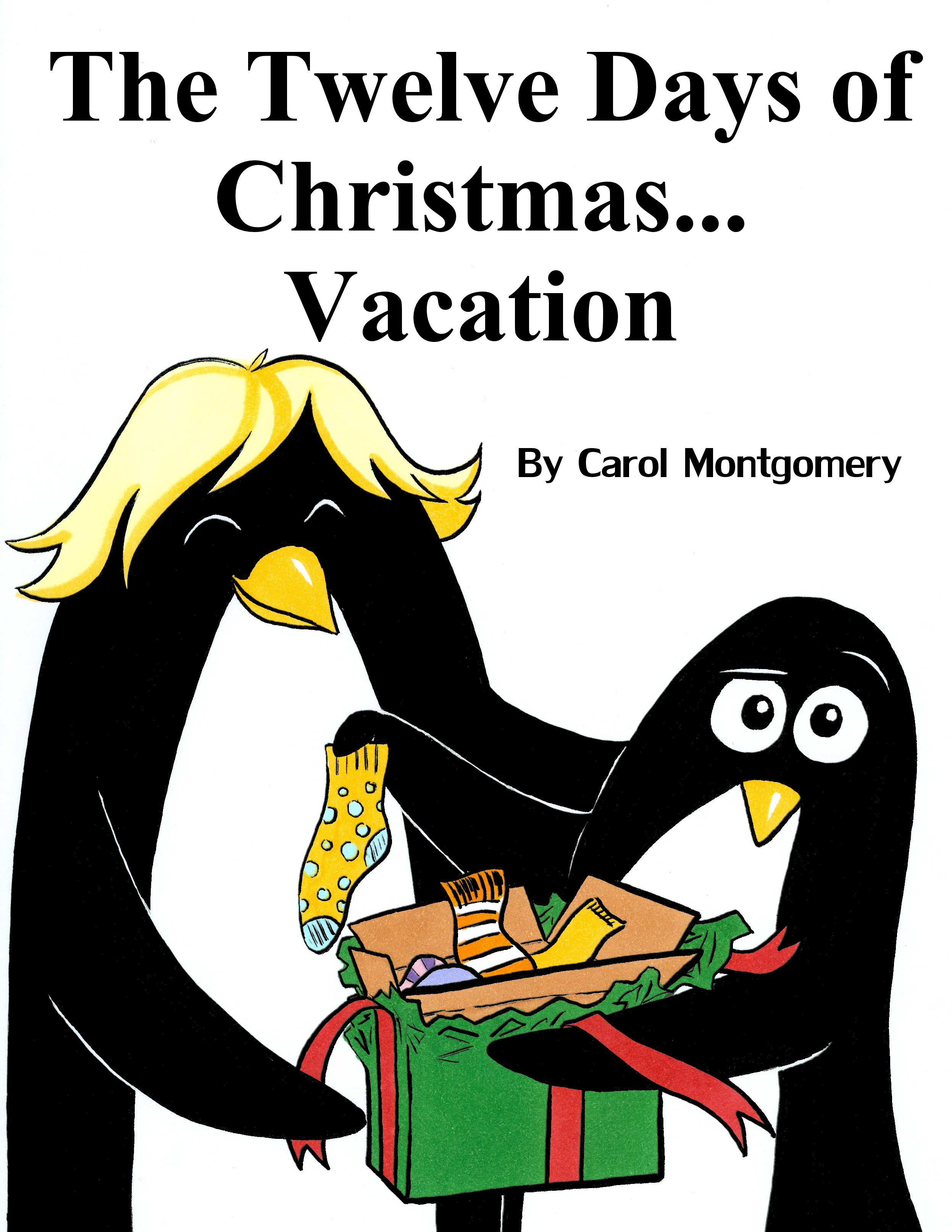
Twelve Days of Vacation

On the first day of Christmas Vacation, my mother gave to me ----
a coupon for a broom to clean my room!

Follow this link and see the rest of the "song."

Words of the Day Test, Fall 2015

Writing 1, Fall 2015 Name:  _______________________________

Word of the Day -- Final Test

A.     Match the words from the Words of the Day list with its synonyms.

Garret                    Parody
Chapeau                Garbage
Vindaloo                Peas
Macho                   Curry
Detritus                  Genie
Charade                 Manly
Mange-tout                        Hat
Medico                  Attic
Jinny                      Physician

B.      Circle the correct answer to complete the sentence


1.       I think I might add some ruche to my
a.       spaghetti
b.      sleeves
c.       car engine
d.      a playground


2.       The tall Egyptian was
a.       eating a jellaba
b.      wearing a jellaba
c.       growing a jellaba
d.      singing a jellaba


3.       The man’s caustic reply made me feel
a.       hungry
b.      sleepy
c.       hurt
d.      bored


4.      A restaurateur would
a.       serve good food to his customers
b.      do winter gardening
c.       take the law into his own hands
d.      play the harp in church

5.      A comprehensive view of the world is a
a.       clairvoyant
b.      harbinger
c.       weltanschauung
d.      lollapalooza


6.      Felicity Foote, the dance teacher, was teased because of her
a.       shop’s location
b.      choice of cars
c.       next door neighbors
d.      aptronym


7.      The professional contralto was paid by
a.       the opera company
b.      the police department
c.       a veterinarian
d.      the bakery


8.      The retired professor was given the title
a.       eclectic
b.      emeritus
c.       pious
d.      extemporaneous

C.    Fill in the blank with the missing words of the sentence.

1.       A novice or beginner might be referred to as a  ____________________.
2.      That the world would end January 1 was an _________________ of the young man’s.
3.      A  _______________________ flowed gently beside the river.
4.      The General’s coffin was place on an ornate  _________________.
5.      The _____________________ was painted on the walls of the villa.
6.      They chose him as _________________________, the intermediary between the ruler and the people
catafalque        fresco              tyro                  idee fixe                      billabong          internuncio


D.     True or False

________  1.  The lumpenproletariat invest money in diamonds.
________  2.  A jojoba is a small shrub whose seeds are used to make lotion.
________  3.  An icon is used to fix car engines.
________  4.  The misanthropic man was known for giving money and helping others.
________  5.  The happy, enthusiastic crowd cheered with great elan.


E.      Match the words with their roots and meaning.

Ich dien                        Latin, “Things not words”       
Dixit                            Greek, “stranger” and “fear”
Xenophobia                  Indo-Portuguese, “Wine of garlic”
Res non verba              German, “I serve”
Res publica                  Arabic, “Demon”
Vindaloo                      Latin, “He himself said”
Jinni                             Latin, “Thing of the public”