Showing posts with label Christmas. Show all posts

Thursday, December 17, 2020

Writing 1 Class Notes -- Week 15 (December 17)

Greetings!
We celebrated our final class with a "Christmas party" that included an "Ugly Christmas Sweater Design" contest and a Jeopardy game.  They were pretty intent on their designing and coloring.  When they were finished, they voted on the best/worst sweater design.  


After our drawing and coloring, we had a Final Exam for A Christmas Carol in the form for a game.  In order to form teams, students were given names of songs that they had to hum in order for them to find their teammates.  Watching them walk around the classroom while humming was delightful! There were 20 questions which they answered or tried to answer; when they got the wrong answer, they lost points.  It was a fairly competitive game/test.  (By the way, research also indicates that using game-based learning strategies increases recall, retention, and cognitive growth.  So while we were having fun, we were still intellectually engaged in our topics.) 

We closed out our time together playing a Mad Libs game using the Night Before Christmas.  This was a good game to follow our Parts of Speech unit.

Students handed in their final drafts of their History Essays.  I will go over the essays and any other homework that was handed; my goal is to have final grades out soon.  I mentioned to the class that I will take any homework today (until 11:59 p.m.) for full points value; I will also take work until Saturday, but for 1/2 point values.  As I told students, I've carefully gone through all of the Google Classroom assignments, so students need to contact me if they finish any assignments in Google Classroom.

Links for this week:
Class Notes (with pictures)


I've enjoyed this group of students.  Each one is uniquely gifted for the plans that God has for him/her.  Have a blessed Christmas!!
Blessings, 
Mrs. Prichard


Friday, December 11, 2020

Writing 1 Class Notes -- Week 14 (December 10)

 Greetings!


Every Thursday this semester it's been delightful to see the smiling faces of this class.  I love this place in the school year when we've gotten to know one another and have a productive learning community.

We started class with a Quick Write, using these prompts that came from their list of suggestions:
Option 1: What is your favorite restaurant? Why? What do you like to order there? Option 2: What is your least favorite kind of music? Why don’t you like it? Option 3: What is the most generous thing you’ve done? Would you do it again? Why?  

Our Words of the Day were winter-related words:
solstice -- from Latin solstitium, from sol, "sun" and sistere, "stopped, stationary" --  the time or date at which the sun reaches its maximum or minimum declination, marked by the longest (June 21) and shortest (Dec. 22) days.
hibernate -- from Latin hibernare, from hiberna ‘winter quarters’, from hibernus ‘wintry’ -- when a plant or animal spends the winter in a dormant state.
apricity -- from Latin apricus, "having lots of sunshine" or "warmed by the sun" -- the warmth of the sun (We talked about how cats are especially good at finding that one sunny spot in the house.)
subnivean -- from Latin sub, "under" and nives, "snow" -- the area between the surface of the ground and the bottom of the snowpack.

The Rough Drafts of their History Essays were handed back, and I commented on how much I enjoy teaching writing because I get to learn about so many topics from their essays.  I covered some common writing issues/errors, including writing dates and numbers and correcting comma splice sentences.  The Final Drafts are due next week.

We've finished A Christmas Carol and had a very productive and insightful conversation comparing Animal Farm and A Christmas Carol.  The focus of the conversation was how satisfying or unsatisfying the endings of the books were; this led us to talk about the author's intent.  This is a smart bunch!  We ended our class with mini-book project activities.  The class divided into 4 groups for the following activities:  comic strip panel creation, found poetry writing, scene creating, and dialogue writing.  We'll continue that work in class next week as part of our Christmas "party" fun.

Speaking of next week, I like to spend that last week before Christmas doing fun stuff.  We can't have food in the classroom, but we can set up a table in the hallway for treats and eat out there.  Students are invited to bring goodies.  

Since we're almost at the end of the semester, students should finish up any work they have not done.  In the assignments list, I've included a couple past assignments in case students have forgotten to do them.  All assignments are on Google Classroom in case students no longer have the paper version.

Have a great weekend!
Mrs. Prichard

Assignments for Next Week:
History Final Draft
Top 10 Movies Question  (Extra Credit)
Parts of Speech Post Test
Presentation Self-Evaluation

This Week's Links
Writing 1 Class Notes -- Week 14 (December 10) 

Friday, December 13, 2019

Writing 1B Class Nores -- Week 15 (December 12)

Greetings!

We began our final class with a short Quick Write to reflect on the class and on the past semester.  Research shows that reflecting on what and how you have learned enhanced meaning and encourages insight and complex understanding.  (Here's a good article on learning through reflection.)  For that reason, I have students take time to think back on the semester.  I asked them to briefly write about something they learned academically and something they learned about themselves.


We celebrated our final class with a Christmas party that included an "Ugly Christmas Sweater Design" contest and a Jeopardy game.  They were pretty intent on their designing and coloring.  The Jeopardy game included the following topics:  Characters, Ghosts, Vocabulary, Scrooge, and Jokes.  By the way, research also indicates that using game-based learning strategies increases recall, retention, and cognitive growth.  So while we were having fun, we were still intellectually engaged in our topics.  The students numbered off and competed in teams.

Students handed in their final drafts of their History Essays.  I will go over the essays and any other homework that was handed in yesterday; my goal is to have final grades out by the end of next week.  If students are missing any work, I will take it until next Thursday.  In class we cleared up some questions about missing work and My GradeBook.  If parents or students have any more questions, feel free to contact me.

This has been a good class, and the students worked hard on their reading assignments and their essays.  A small class has advantages and disadvantages.  This means students have plenty opportunities to be involved in discussions, and I've used literature circles more often with this class because of the smaller size.  On the other hand, small classes means that there's nowhere to hide if you come to class unprepared or just not up to engaging in conversation.  All of the students have been good sports during class discussions.  

Links for this week:
Class Notes (with pictures & videos)

I've enjoyed this group of students.  Each one is uniquely gifted for the plans that God has for him/her.  Feel free to keep in touch.
Blessings, 
Mrs. Prichard

Writing 1A Class Notes -- Week 15 (December 15)

Greetings!

We began our final class with a short Quick Write to reflect on the class and on the past semester.  Research shows that reflecting on what and how you have learned enhanced meaning and encourages insight and complex understanding.  (Here's a good article on learning through reflection.)  For that reason, I have students take time to think back on the semester.  I asked them to briefly write about what worked well, what didn't work, and what one "thing" they learned (from any class) that they found amazing.  I especially value their comments about the structure of the class because these comments help me make adjustments and improvements.


We celebrated our final class with a Christmas party that included an "Ugly Christmas Sweater Design" contest and a Jeopardy game.  They were pretty intent on their designing and coloring.  The Jeopardy game included the following topics:  Characters, Ghosts, Vocabulary, Scrooge, and Jokes.  By the way, research also indicates that using game-based learning strategies increases recall, retention, and cognitive growth.  So while we were having fun, we were still intellectually engaged in our topics.  In order to form teams, students were given names of songs that they had to hum in order for them to find their teammates.  Watching them walk around the classroom while humming was delightful!


Students handed in their final drafts of their History Essays.  I will go over the essays and any other homework that was handed in yesterday; my goal is to have final grades out by the end of next week.  If students are missing any work, I will take it until next Thursday.  In class we cleared up some questions about missing work and My GradeBook.  If parents or students have any more questions, feel free to contact me.


Links for this week:
Class Notes (with pictures)

I've enjoyed this group of students.  Each one is uniquely gifted for the plans that God has for him/her.  Feel free to keep in touch.
Blessings, 
Mrs. Prichard

Saturday, October 29, 2016

A Christmas Carol Vocabulary

Choose 4 words from each Stave to define (and find any Latin or Greek roots, naturally!) 

Note:  You may choose up to 5 extra words to do for extra credit.

Stave 1
Stave 2
Stave 3
Stave 4
Stave 5
Unhallowed
Entreaty
Impropriety
Multitude
Executor
Trifle
Resolute
Tremulous
Legatee
Implore
Lunatic
Rapture
Garret
Covetous
Replenish
Credentials
Congeal
Misanthropic
Solitary
Intimation
Ominous
Caustic
Plaque
Reclamation
Expend
Tumult
Recumbent
Jocund
Transition
Capacious
Tunic
Instantaneous
Loath
Deftly
Brigands
Lustrous
Latent
Condescension
Corroborate
Pillaged
Conducive
Laden
Decanter
Aspiration
Consolation
Glee
Subsequently
Withered
Seething
Demurely
Prematurely
Goblets
Demeanor
Conspicuous
Shabby
Exulted
Grog
Compulsion
Swarthy
Ubiquitous
Blithe
Abyss
Intricate
Bilious
Ensued
Dismal
Repute
Flaunting
Beseech
Inexorable
Disgorge
Repent
Relents
Replete
Reek
Scanty
Faltered
Foreshadow
Repulse
Slipshod
Revered
Essence
Intercede
Dwindle
Beetling
Avarice
Tarry
Strive
Gruel
Recompense
Jiffy
Hearty
Peals
Portly
Feign
Sealingwax
Jovial
Pang
Waistcoat
Illustrious
Extravagance
Loitered
Sidled
Endeavor
Amends
Giddy
Poulterer
Array
Borough
Dispelled

A Christmas Carol Study Questions


Stave One Questions ~
1. What is the simile in the second paragraph?
2. Why does the narrator make such a point of Marley’s being dead?
3. Why doesn’t the weather affect Scrooge?
4. How is Scrooge’s nephew different from Scrooge?
5. What do the “portly gentlemen” who come in after Scrooge’s nephew leave want?
6. How does the knocker change?
7. Why does Scrooge like the darkness?
8. What has Marley’s ghost been doing since his death?
9. What is the warning that Marley gives Scrooge?
10. Why are the phantoms upset?


Stave Two Questions ~
1. What was the strangest thing about the way the spirit looked?
2. What is Scrooge’s initial attitude toward the spirit?
3. What is different about Scrooge when he says “Remember it? I could walk it with a blindfold?”
4. Who is Scrooge talking about when he says “Poor boy!”
5. What does it tell us about Scrooge when Dickens observes“a rapidity of transition very foreign to his usual character.”?
6. When Fan comes to pick Scrooge up, we learn a reason why Scrooge may have turned out the way he did. What is this reason?
7. What kind of people are the Fezziwigs?
8. Who is Belle and why was she important to Scrooge?
10. How does Scrooge try to "extinguish the light"? Does he succeed? What is the light a symbol of?


Stave Three Questions
1. How is what Scrooge is thinking as he lies in bed waiting to see if the spirit appears different from the previous chapter?
2. What does the spirit look like?
3. What is this ghost’s personality like?
4. How has Scrooge’s attitude toward his being
6. What are three significant things we learn about the Cratchit’s?
7. How is Scrooge affected by seeing the family?
Stave Four Questions ~
1. What does the spirit of Christmas future look like?
2. What is this spirit’s personality like?
3. How does Scrooge feel about this spirit?
5. What are some of the words Dickens uses to create the mood of the paragraphs that follow?  What is this mood?
6. When Scrooge asks the phantom to let him "see some tenderness connected with a death,” What does the ghost show him?
7. What is the lesson Scrooge learns in this stave that he had not learned before? Why is this stave needed when Scrooge’s attitude had already changed so much.


Stave Five Questions ~
1.        Describe Scrooge when he first awoke on Christmas morning.
2.       Whom does Scrooge encounter?  How does he act?
3.       Compare Scrooge’s interactions from Stave 1 and his interactions in Stave 2.
4.       Explain the role of empathy in Scrooge’s conversion.
5.       How were the three spirits similar?  How are they different?


Introduction to A Christmas Carol

  
            A Christmas Carol is a fairly straightforward allegory built on an episodic narrative structure in which each of the main passages has a fixed, obvious symbolic meaning. The book is divided into five sections (Dickens labels them Staves in reference to the musical notation staff--a Christmas carol, after all, is a song), with each of the middle three Staves revolving around a visitation by one of the three famous spirits. The three spirit-guides, along with each of their tales, carry out a thematic function--the Ghost of Christmas Past, with his glowing head, represents memory; the Ghost of Christmas Present represents charity, empathy, and the Christmas spirit; and the reaper-like Ghost of Christmas Yet to Come represents the fear of death. Scrooge, with his Bah! Humbug! attitude, embodies all that dampens Christmas spirit--greed, selfishness, indifference, and a lack of consideration for one's fellow man.

from Victorian Age
http://www.guidanceassociates.com/victorianage.html


            The Victorian Age is a very elastic term used to denote an extremely dynamic period. Although the Victorian Age roughly spans most of the 19th century (from 1832 to 1900), it is not totally confined within these dates. The rumblings of change to come were felt for some time before 1832, and changes did not stop occurring as soon as Queen Victoria died in 1901. However, lifestyles did change more dramatically during this period than ever before in English history. England was suddenly pulled together by the railways, the penny post, and the rest of the newly constructed apparatus of fast, cheap communication. The country became unified in a way never before possible.
            Prior to the middle of the 19th century, education had been reserved for the nobility and those who could afford to send their children to exclusive private schools. Even if the poor had been able to enter their children in these schools, they would not have done so. A child of six was expected to start bringing home money to help support his entire family; he would be put to work as soon as possible. In those days work meant twelve to sixteen hours a day of grueling, hard labor in conditions that would today be considered totally unacceptable. There was no time spare for education. However, with the appearance of the modern public school system it became fashionable and necessary for the children of the lower classes to at least learn the rudiments of the 3 R’s. With these assets, they could go on to vocational apprenticeships in one of the trades.
            Great nationalistic spirit developed during the Victorian Age, and England struggled to place herself at the top of the international scene. At the time of the Great Exhibition of 1851, England was influential in many countries. By the end of the Victorian Age, the British Empire had reached the high point of its development.

            During this period the extreme poverty of the lower working classes was pointed up by the increasingly congested living conditions of city life. While the nobility still hung onto its money and its social barriers, and an individual’s birthright tended to be the deciding factor of his future, the rapidly expanding middle classes made steady inroads. The middle-class novelist, Charles Dickens, did more than any writer before or since to expose the sufferings of the working class. His books found their way into the drawing rooms of the titled and wealthy, and social consciousness began to rise. Emancipation of women and the rights of children became popular cases for the previously sheltered nobility. They brought their money and influence to bear in demanding better working conditions and broader education for the working class. A kind of feverish sentimentality of guilt gripped everyone.  The debt owed to Charles Dickens for the many reforms of the Victorian Age is certainly not a small one.

Thursday, December 17, 2015

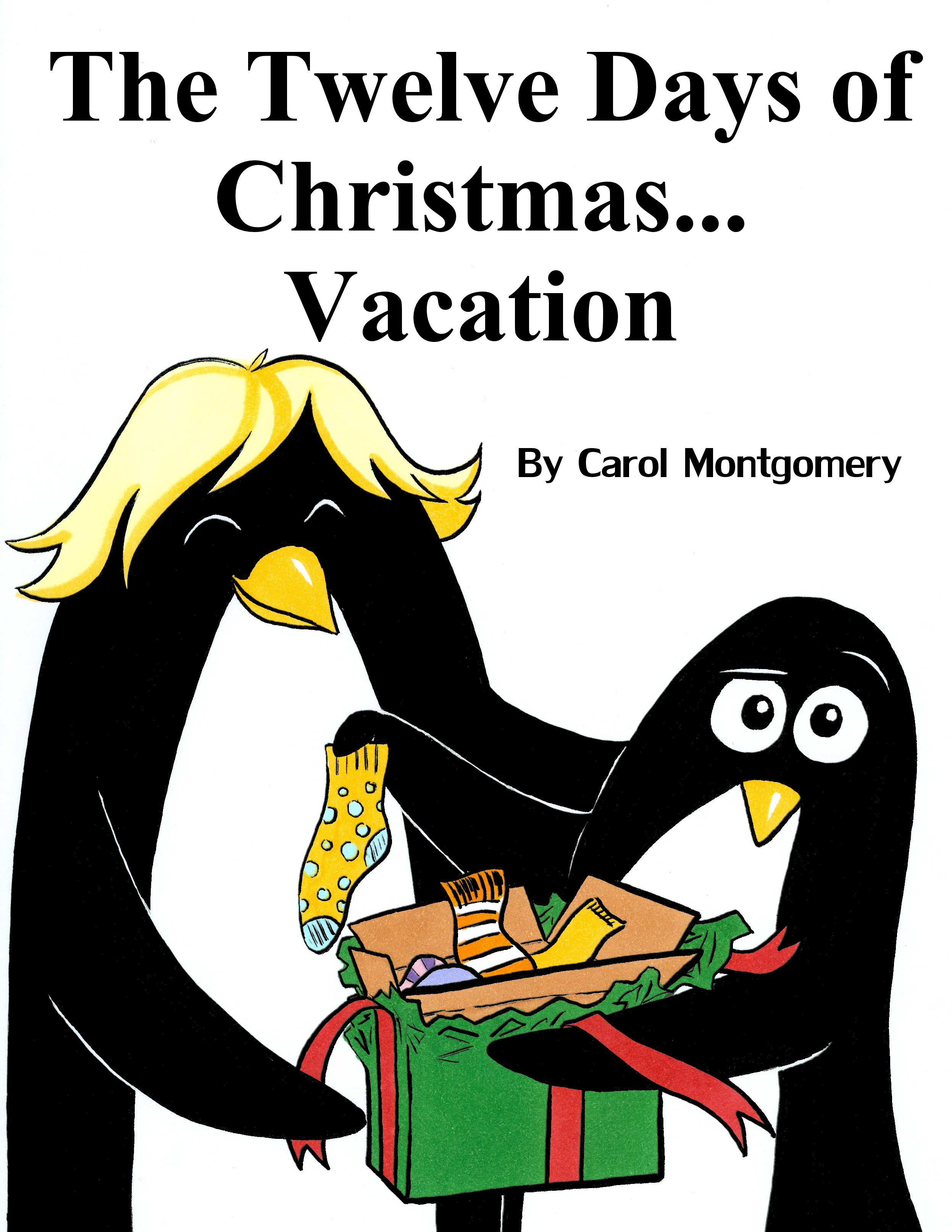
Twelve Days of Vacation

On the first day of Christmas Vacation, my mother gave to me ----
a coupon for a broom to clean my room!

Follow this link and see the rest of the "song."

'Twas the Night Before -- Mad Libs, part 2

‘Twas the night before Christmas and all through the (noun),
not a creature was stirring, not even a/an (noun).
The (plural noun) were tucked, all snug in their (plural noun),
while visions of (adjective) plums danced in their heads.
Then up on the (noun) there arose such a clatter.
I sprang from my (noun) to see what was the matter.
It was St. Nicholas with his little (adjective) belly,
That shook when he laughed like a bowl full of (plural noun).
He spoke not a word, but went straight to his work
And filled all the (plural noun), then turned with a jerk.
And laying his (noun) aside of his nose
And giving a nod, up the (noun) he rose.
I heard him exclaim as he (past tense verb) out of sight,

“(adjective) Christmas to all, and to all a good night!”

"Twas the Night Before" Mad Libs PowerPoint

Thursday, December 13, 2012

Writing 1 Class Notes -- December 12

Greetings!

We closed out our Fall semester in great fashion.  I had made brownies, and other students brought in treats.  Our class yesterday was an effort to have a party while finishing up our writing class for the semester.

Our Quick Write was a group effort. Dividing the class into 3 groups, they were each given a list of Christmas Jokes without their punchlines.  They were to either guess what the real answer was or come up with a better one.  Most of the answers were puns or mutations of Christmas related words. Do you know the answer to these?
        1.   What did Adam say on the day before Christmas?
        2.   Who is never hungry at Christmas?
        3.  How do you know when there is a snowman in your bed? 
Some of the jokes were clever, and some were real "groaners."

Following our activity with the Christmas jokes, students handed in their final drafts of their History Essays.  They also handed in any out-standing/ missing assignments.  After I finish grading these papers, I'll send out grades along with my thoughts about points and grades.

We finished our study of A Christmas Carol with a "Final Exam" which was more fun than hard work.  I handed to each student the name of a character in the book.  They then needed to interact with another student who was a different.  For example, Tiny Tim might have to talk with the Ghost of Christmas Past.  Or Charles Dickens might narrate directions to any of the other characters.  The students did a great job at being creative and thinking quickly "on their feet."  The second half of this "exam" dealt with some of the vocabulary words.  Dividing the class into two teams, they were each given a word from one of the Staves that they had to act out in order for the other team to guess.  The words were not simple ones:  solitary, covetous, decanter, withering.  Again, they did very well.

To end the class, we watched two scenes from my favorite version of A Christmas Carol, the Muppets version.

I've enjoyed this semester with this group of students.  They are a fun crew and are growing as writers. I'm looking forward to our Spring semester.

Have a blessed holiday season!
Mrs. Prichard

PS.  The punch lines to the jokes above:
        1.  "It's Christmas, Eve."
        2.  The turkey -- it's stuffed.
        3.  It's all wet.

This week's blog

Christmas Jokes


Below is the list of jokes from our Quick Write.  Enjoy!


What did Adam say on the day before Christmas?
It's Christmas, Eve!

Who is never hungry at Christmas?
The turkey - he's always stuffed!

How do you know when there is a snowman in your bed?
You wake up wet!

What would a reindeer do if it lost its tail?
She’d go to a “re-tail” shop for a new one!

Q: Why was Santa's little helper depressed?
A: Because he had low elf esteem.

Q: What do snowmen eat for breakfast?
A: Snowflakes.

Last year's Christmas pudding was so awful I threw it in the ocean.
That's probably why the ocean's full of currants!

What's the first thing elves learn in school?
The "elf"-abet!

What do the elves call it when Father Christmas claps his hands at the end of a play?
Santapplause!

What do you call people who are scared of Santa Claus?
Claustrophobic!

What do you call Santa when he has no money?
Saint "Nickel"-less!

What do you call someone who doesn't believe in Father Christmas?
A rebel without a Claus!

What do you get if you cross Santa with a flying saucer?
A UF ho, ho, ho

What do you get if you cross Santa with a gardener?
Someone who likes to hoe, hoe, hoe!

And what goes oh! oh! oh?
Father Christmas walking backwards.

What nationality is Santa Claus?
North Polish!

What's red & white and red & white and red & white?
Santa rolling down a hill!

Where does Santa stay when he's on holidays?
At a Ho-ho-tel

What do snowmen eat for lunch?
Icebergers !

How do snowmen travel around?
By iceicle!

How do snowmen greet each other?
Ice to meet you!

What do you call a snowman in the summer?
A puddle

What's a snowman's favorite Mexican food?
Brrrrrr-itos!

Q: What do you get if you cross Father Christmas with a detective?
A: Santa Clues!

Sherlock's favorite Christmas song:
"I'll be Holmes for Christmas"

How do sheep in Mexico say Merry Christmas?
Fleece Navidad!

What is green, covered with tinsel and goes "ribbet ribbet"?
A mistle-"toad"!

What did the grape say to the peanut butter?
"'Tis the season to be jelly!"

Why did the gingerbread man go to the doctor?
Because he was feeling crummy!

What kind of money do they use at the North Pole?
Cold cash!

What kind of music do elves like best?
"Wrap" music!

Who sings "Blue Christmas" and makes toy guitars?
Elfis!