Greetings!
Thankfully, we all made it to class safely despite our biggest snow of the season. With President's Day in mind, our Quick Write for today was "Write a promo for a new national holiday." For our Vocabulary Challenge, they shared words they had found in their reading of A Connecticut Yankee.
We segued from our vocabulary discussion to our book, ACY. We specifically read aloud a portion that describes "Sandy," Hank's companion on his quest. We also looked at a portion in which Morgan le Fay thinks she can take a photograph with an axe. Twain's use of words both in describing and in humor are key aspects of this book. The class broke into small groups to discuss their assignments for this week which was to find examples of humor. The students were then to present what they thought was the best example. Some students are not enjoying the book as much as others. The vocabulary is challenging, but if the students read carefully, they'll enjoy the story and the ironic wit of the book. Encourage them to give themselves plenty of time to read (instead of quickly cramming just before the class).
I handed back the their final copies of their news stories. I enjoyed reading them. Their writing is definitely improving. We discussed how to write numbers in essays. On the blog, I explain the guidelines generally used. The students are to be working on the rough drafts of their editorials. These are to be short, persuasive essays.
Assignments for Next Week:
-- Read ACY to Chapter 26 (p. 150)
-- Continue to work on the Themes, Character & Vocabulary worksheets.
-- Work on Editorial Rough Draft
-- Extra Credit: Find the origin and meaning of your names (first, middle, and last)
Have a great week!
Mrs. Prichard
Tuesday, February 21, 2012

Writing Numbers in Essays
Convention determines when to use a numeral and when to spell out a number. Numerals are commonly used in scientific and technical writing and in journalism, but they are used less often in academic or literary writing.
The following guidelines are base on the MLA Handbook for Writers of Research Papers. APA style, however requires that all numbers below ten be spelled out if they do not represent specific measurements and that the numbers ten and above be expressed in numerals.
Spell the numbers out as words if:
-- you can to so in one or two words; as a rule of thumb, these are numbers one hundred and under;
-- beginning a sentence with a number;
Conventional Uses of Numerals
-- Addresses. e.g. 111 Fifth Avenue
-- Dates. e.g. January 15, 1929; 1914 - 1919
-- Exact times. e.g. 9:16; 10 a.m.; 10:00 a.m. (but spell out times of day when they are used with o'clock: ten o'clock)
-- Exact sums of money: e.g. $25.11; $6,738.00
-- Literary divisions: e.g. Act 5; lines 17 - 28; page 42
-- Percentages and decimals: e.g. 80%; 3.14
Note: You may spell out a percentage (eighty percent) if you use percentages infrequently in your paper, provied the percentage can be expressed in two or three words. Always use a numeral (not a spelled-out number) with a % symbol.
The following guidelines are base on the MLA Handbook for Writers of Research Papers. APA style, however requires that all numbers below ten be spelled out if they do not represent specific measurements and that the numbers ten and above be expressed in numerals.
Spell the numbers out as words if:
-- you can to so in one or two words; as a rule of thumb, these are numbers one hundred and under;
-- beginning a sentence with a number;
Conventional Uses of Numerals
-- Addresses. e.g. 111 Fifth Avenue
-- Dates. e.g. January 15, 1929; 1914 - 1919
-- Exact times. e.g. 9:16; 10 a.m.; 10:00 a.m. (but spell out times of day when they are used with o'clock: ten o'clock)
-- Exact sums of money: e.g. $25.11; $6,738.00
-- Literary divisions: e.g. Act 5; lines 17 - 28; page 42
-- Percentages and decimals: e.g. 80%; 3.14
Note: You may spell out a percentage (eighty percent) if you use percentages infrequently in your paper, provied the percentage can be expressed in two or three words. Always use a numeral (not a spelled-out number) with a % symbol.
-- Measurements with symbols or abbreviations. e.g. 32°, 15cc
-- Ratios and statistics. e.g. 20 to 1; a mean of 40
-- Scores. e.g. a lead of 6 to 0
-- Identification numbers. e.g. Route 66; Track 8; Channel 12
When using numbers, follow the general rules. However, it's important to be consistent. If some of your numbers are written as numerals because they're decimals or over 100, then the related numbers should also be written in that manner.
Wednesday, February 15, 2012
Writing 1 Class Notes -- February 14
Greetings!
The students handed in their final copies of their News Stories. Continuing in a "reporter" theme, they are to write an Editorial which is a really a short persuasive essay. I expound on this assignment in a separate blog entry. For next week, the students are to do their pre-writing work.
Assignments for Next Week:
-- Read ACY (p. 71 - 107; Ch. 16 - 21)
-- Continue working on the worksheets
-- Find and write down 3 examples Twain's humor.
-- Pre-writing for the Editorial
Have a great week!
Mrs. Prichard
Happy Belated Valentine's Day! In honor of the day, the Quick Write was a "literary love letter." They were to write a letter of affection and appreciation to an author, book, character, grammar item like punctuation or parts of speech. We had a creative piece expressing love for "rhyming." For our Vocabulary Challenge, the students added their own words to the list.
The next part of our discussion centered on the our book, A Connecticut Yankee in King Arthur's Court. I re-explained the worksheets on Character Analysis, Themes, and Vocabulary. It's important that they work on these AS they are reading. In other words, they should fill in the boxes with words, actions, and supporting information from the book. Students from last year's Writing 1 class felt that leaving it to the last minute had a hard time.
As we discussed the book, we read aloud some of the portions Twain's writing can be difficult at first, but if you read carefully and not try to rush through it, the humor and descriptions are delightful.
Assignments for Next Week:
-- Read ACY (p. 71 - 107; Ch. 16 - 21)
-- Continue working on the worksheets
-- Find and write down 3 examples Twain's humor.
-- Pre-writing for the Editorial
Have a great week!
Mrs. Prichard
Writing an Editorial
An editorial is a short persuasive essay which contains the writer's opinion or reaction to a timely news story or event. Its primary purpose is to influence readers to think or act the same way the writer does.
An editorial (persuasive essay) also:
-- Informs: Sometimes the topic requires careful explanations because it is a complicated issue.
-- Promotes: An editorial can promote the value of a worthy activity or involvement in that activity.
-- Praises: The aim of some editorials is to commend or praise individuals or events because of their impact.
-- Entertains: Some editorials simply encourage their readers and aim to lift the mood of the readers.
Choose a timely topic for your editorial, and make sure that it is a subject that is of real interest to you and to your readers. One way to start is with a clear statement of what you are trying to prove in your writing. Put this statement in positive terms. For example: "The food in the cafeteria should be well-balanced and healthy." NOT "The food in the cafeteria is not healthy." The essay could also begin with a unique statement or quote.
An editorial (persuasive essay) also:
-- Informs: Sometimes the topic requires careful explanations because it is a complicated issue.
-- Promotes: An editorial can promote the value of a worthy activity or involvement in that activity.
-- Praises: The aim of some editorials is to commend or praise individuals or events because of their impact.
-- Entertains: Some editorials simply encourage their readers and aim to lift the mood of the readers.
Choose a timely topic for your editorial, and make sure that it is a subject that is of real interest to you and to your readers. One way to start is with a clear statement of what you are trying to prove in your writing. Put this statement in positive terms. For example: "The food in the cafeteria should be well-balanced and healthy." NOT "The food in the cafeteria is not healthy." The essay could also begin with a unique statement or quote.
Friday, February 10, 2012
Writing 1 Class Notes -- February 7
Greetings!
I handed back the rough drafts of their most recent writing assignment which was a News Story. I feel that our discussions about the rough drafts are the most productive. We not only cover grammar mistakes, but our discussion about writing strategies makes more sense when you have something you've written in your hands. We took a longer time to discuss "choosing the right word." I look forward to reading the final copies of these papers next week.
We've begun reading A Connecticut Yankee in King Arthur's Court by Mark Twain. I encouraged the students to be patient with his writing style. After a few chapters, we'll be more accustomed to his word choices and sentence structures. I took a longer time to explain the worksheets that I handed out. On the handout which was an introduction to the book, I listed 12 characters and 7 themes. The worksheets/charts that I handed out are to help them keep track of the information they find when they read. I would like them to fill out papers for 4 characters and 4 themes. I explained that they should be reading the book while looking for the answers as they read. I'll check in with them weekly, but the worksheets aren't due until the end of the book.
Assignments for Next Week:
-- Read p. 37 – 71(Ch. 8 - 15) of ACY
-- Fill out Vocabulary, Character and Themes worksheets as you read
-- Final copy of News Story
Enjoy the weekend!
Mrs. Prichard
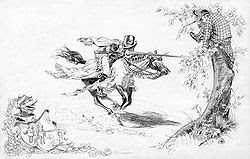
When you combine a busy schedule with being under the weather, sometimes you don't get things done as soon as you'd like. I aim to get the Class Notes done ASAP after the class. I hope the fact that they are a little later doesn't mess up anyone's schedule.
In honor of the caucuses which were to be held, I asked the students to write a politically-themed Quick Write. They were to write from the following prompt: "Dear _________ , Won't you please be our president. ..." They could pick anyone and be either serious or funny. As always, we enjoyed the responses. One student even wrote asking his dad to be president. Our Vocabulary Words came from the first section of our reading of A Connecticut Yankee.
We've begun reading A Connecticut Yankee in King Arthur's Court by Mark Twain. I encouraged the students to be patient with his writing style. After a few chapters, we'll be more accustomed to his word choices and sentence structures. I took a longer time to explain the worksheets that I handed out. On the handout which was an introduction to the book, I listed 12 characters and 7 themes. The worksheets/charts that I handed out are to help them keep track of the information they find when they read. I would like them to fill out papers for 4 characters and 4 themes. I explained that they should be reading the book while looking for the answers as they read. I'll check in with them weekly, but the worksheets aren't due until the end of the book.
Assignments for Next Week:
-- Read p. 37 – 71(Ch. 8 - 15) of ACY
-- Fill out Vocabulary, Character and Themes worksheets as you read
-- Final copy of News Story
Enjoy the weekend!
Mrs. Prichard

Tuesday, January 31, 2012
Writing 1 Class Notes -- January 31
Greetings!
We had another good class today. The students were bright, alert, and engaged. The Quick Write was titled "For the Cause." I asked the students to think about a cause about which they were passionate (or to make up one) and to write what they would do to further that cause. (Our family had just watched The Help and was touched by the message of the movie.)
Our Vocabulary Work included words from the O. Henry short stories that were assigned for this week. O. Henry has a broad and colorful vocabulary. Two examples: obmutescence and philoprogenitiveness. We passed the dictionary around to find the definitions of the words.
We spent some time talking about the 3 short stories by O. Henry. As we discuss these, I especially talk about making clear observations and using precise language. When we discuss the irony found in these stories, the students tap into some higher level thinking skills. They'll use these as they do their own writing.
We're beginning a new book next week. A Connecticut Yankee in King Arthur's Court ("ACY") is a delightful book by Mark Twain and will continue to stretch the students as thinkers and writers. I have some handouts for the students, but I'm afraid my printer wasn't working so that I could print copies for everyone. I've attached these with this e-mail. One is an introduction to the book, characters, and themes. Two are worksheets for the characters and themes in the book. A fourth is for vocabulary that the students find in their reading. Since I wasn't able to hand out copies this week, we'll discuss them in length next week.
The students handed in their rough drafts of their News Stories. I look forward to reading them. When you think about it, writing is a pretty complex activity which combines grammar, creative thinking, knowledge and information, specific writing strategies, and just plain hard work. I'll hand back the rough drafts next week and students will have a week to write up the final copies.
Assignments for Next Week:
-- Read Introduction Worksheet for ACY
-- Print worksheets for Themes, Characters, and Vocabulary
-- Read through Chapter 7 of ACY.
-- Fill out SourceBank up to Week 4
The worksheets are available on Dropbox and can be seen on the blog: Introduction, Vocabulary Worksheet, Character Worksheet, Themes Worksheet.
This Week's Class Notes on the blog.
Have a great week!
Mrs. Prichard
We had another good class today. The students were bright, alert, and engaged. The Quick Write was titled "For the Cause." I asked the students to think about a cause about which they were passionate (or to make up one) and to write what they would do to further that cause. (Our family had just watched The Help and was touched by the message of the movie.)
Our Vocabulary Work included words from the O. Henry short stories that were assigned for this week. O. Henry has a broad and colorful vocabulary. Two examples: obmutescence and philoprogenitiveness. We passed the dictionary around to find the definitions of the words.
We spent some time talking about the 3 short stories by O. Henry. As we discuss these, I especially talk about making clear observations and using precise language. When we discuss the irony found in these stories, the students tap into some higher level thinking skills. They'll use these as they do their own writing.
We're beginning a new book next week. A Connecticut Yankee in King Arthur's Court ("ACY") is a delightful book by Mark Twain and will continue to stretch the students as thinkers and writers. I have some handouts for the students, but I'm afraid my printer wasn't working so that I could print copies for everyone. I've attached these with this e-mail. One is an introduction to the book, characters, and themes. Two are worksheets for the characters and themes in the book. A fourth is for vocabulary that the students find in their reading. Since I wasn't able to hand out copies this week, we'll discuss them in length next week.
The students handed in their rough drafts of their News Stories. I look forward to reading them. When you think about it, writing is a pretty complex activity which combines grammar, creative thinking, knowledge and information, specific writing strategies, and just plain hard work. I'll hand back the rough drafts next week and students will have a week to write up the final copies.
Assignments for Next Week:
-- Read Introduction Worksheet for ACY
-- Print worksheets for Themes, Characters, and Vocabulary
-- Read through Chapter 7 of ACY.
-- Fill out SourceBank up to Week 4
The worksheets are available on Dropbox and can be seen on the blog: Introduction, Vocabulary Worksheet, Character Worksheet, Themes Worksheet.
This Week's Class Notes on the blog.
Have a great week!
Mrs. Prichard
Monday, January 30, 2012
ACY Themes Worksheet
Themes Worksheet
Theme: ___________________
Twain’s perspective | Supporting passages | Your opinion |
Theme: ___________________
Twain’s perspective | Supporting passages | Your opinion |
Subscribe to:
Posts (Atom)